
INFORMATIVE NEWS:
Automatic Door Installations For Safer UK Buildings
Your building entrance says a lot about your business. It’s the first touchpoint for visitors, staff, and clients. But beyond first impressions, your entrance needs to do much more, it must keep people safe, meet legal requirements, and remain accessible to everyone who walks through it.
That’s where proper automatic door installations come in. ADC Entrance Solutions delivers safe, compliant automatic entrances that protect your visitors while meeting UK accessibility standards. This guide covers everything you need to know about installing automatic doors in commercial buildings, from choosing the right door type to understanding safety regulations and planning for long-term maintenance.
Key Takeaways: Automatic Door Installations for Safer UK Buildings
- Automatic doors in UK commercial buildings must comply with BS EN 16005:2023 safety standards and the Equality Act 2010 accessibility requirements.
- Sliding, swing, folding, and revolving doors each serve different purposes, your choice depends on traffic volume, available space, and building layout.
- ADC Entrance Solutions installs automatic doors that meet UK safety regulations while enhancing accessibility for wheelchair users and visitors with limited mobility.
- Professional installation by qualified engineers ensures correct sensor calibration, force limitation, and emergency escape provisions from day one.
- Planned preventative maintenance programmes reduce unexpected breakdowns, extend equipment lifespan, and keep your doors compliant year-round.
Why Do Automatic Door Installations Matter for Building Safety?
Automatic doors are classified as machinery under UK law. This means they fall under the Supply of Machinery (Safety) Regulations 2008, which require that all machinery placed on the market or put into service is safe for users.
The Health and Safety at Work Act 1974 adds another layer of responsibility. Building owners and occupiers must ensure, so far as reasonably practicable, that automatic doors don’t present risks to employees, visitors, or members of the public.
Poor installations can result in serious injuries. Crushing hazards occur when doors close on people. Impact injuries happen when fast-moving panels strike users. Finger entrapment risks exist around hinges and moving components. A properly installed automatic door addresses all these hazards through correct sensor placement, force limitation, and safety barriers.
What UK Safety Standards Apply to Automatic Door Installations?
Two main standards govern automatic door safety in the UK: BS EN 16005:2023 and BS 7036.
BS EN 16005:2023 Requirements
BS EN 16005:2023 is the European standard for power-operated pedestrian doorsets. It specifies safety requirements and test methods for sliding, swing, revolving, and folding doors. The standard addresses functional safety, hazard mitigation, material specifications, and emergency exit provisions.
A door that meets BS EN 16005 is considered to comply with the essential health and safety requirements of the Machinery Directive. This gives building owners valuable protection, compliance demonstrates you’ve taken reasonable steps to ensure safety.
BS 7036 Code of Practice
BS 7036 provides additional guidance specific to the UK market. It covers selection, installation, and maintenance of powered doors for pedestrian use. While not legally binding on its own, courts consistently reference BS 7036 as best practice when accidents occur.
For doors installed before April 2013, BS 7036:1996 may still apply unless significant modifications have been made. Any modernisation that changes functionality requires the system to meet the current BS EN 16005:2023 standard.
How Do Automatic Doors Improve Accessibility in Commercial Buildings?
The Equality Act 2010 requires employers, public institutions, and service providers to make reasonable adjustments so people with disabilities can access their premises. Automatic doors are often the most effective way to meet this obligation.
Door Width Requirements for Wheelchair Access
According to Approved Document M of the Building Regulations, minimum clear opening widths depend on the approach angle:
- At least 800mm clear opening for a straight-on approach (900mm or more preferred)
- At least 825mm clear opening for approaches at an angle where space is restricted
In public buildings such as council offices, libraries, and healthcare facilities, a minimum 900mm clear width is recommended. For double doors, at least one leaf should meet the 800mm minimum.
Touchless Operation for Enhanced Hygiene
ADC Entrance Solutions fits touchless automatic door sensors that detect approaching visitors and open doors automatically. This eliminates the need to physically touch door handles or push pads, particularly valuable in healthcare settings, food preparation areas, and any environment where reducing touchpoints improves hygiene.
Supporting Users with Different Mobility Needs
Automatic doors benefit more than wheelchair users. People with visual impairments rely on sensors to open doors safely without collision risks. Those carrying heavy items or pushing trolleys can pass through without stopping. Elderly visitors with reduced strength or mobility appreciate barrier-free access.
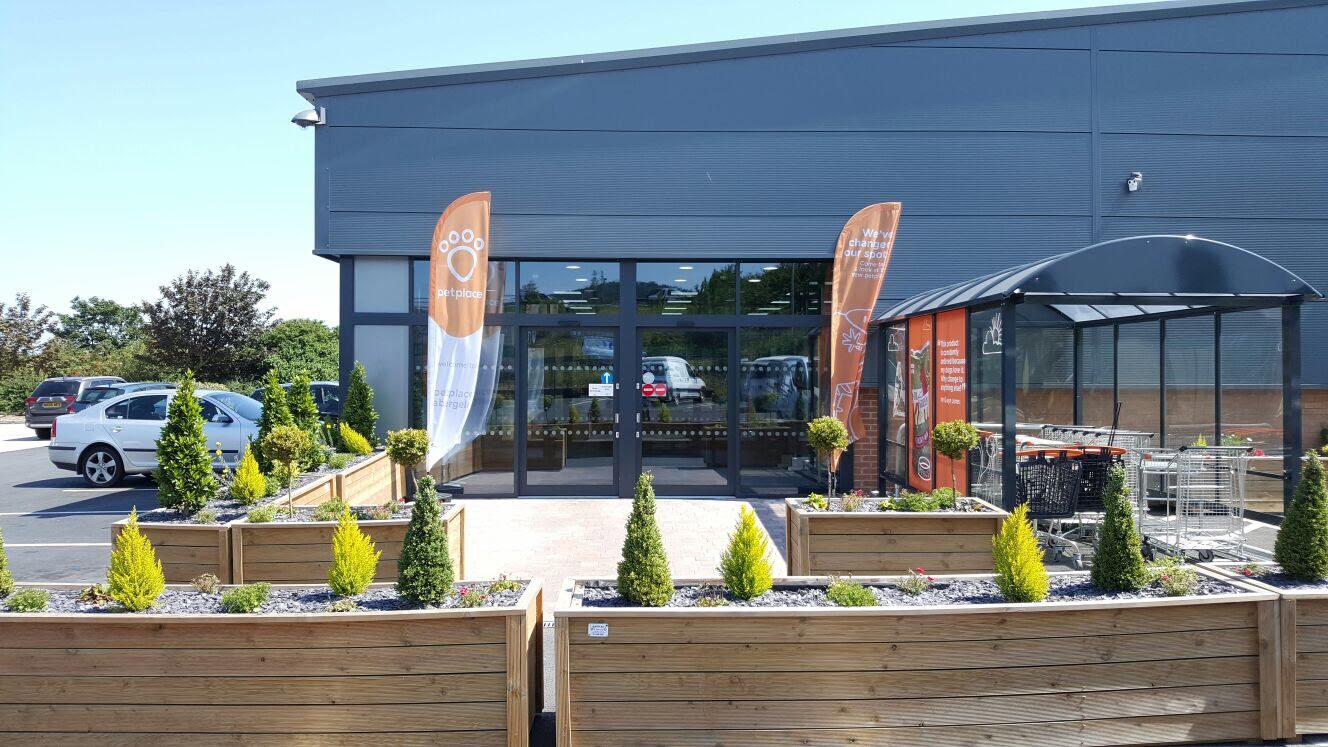
What Types of Automatic Doors Are Available for Commercial Buildings?
Each automatic door type suits different applications. Your choice depends on available space, traffic volume, aesthetic preferences, and specific building requirements.
Automatic Sliding Doors
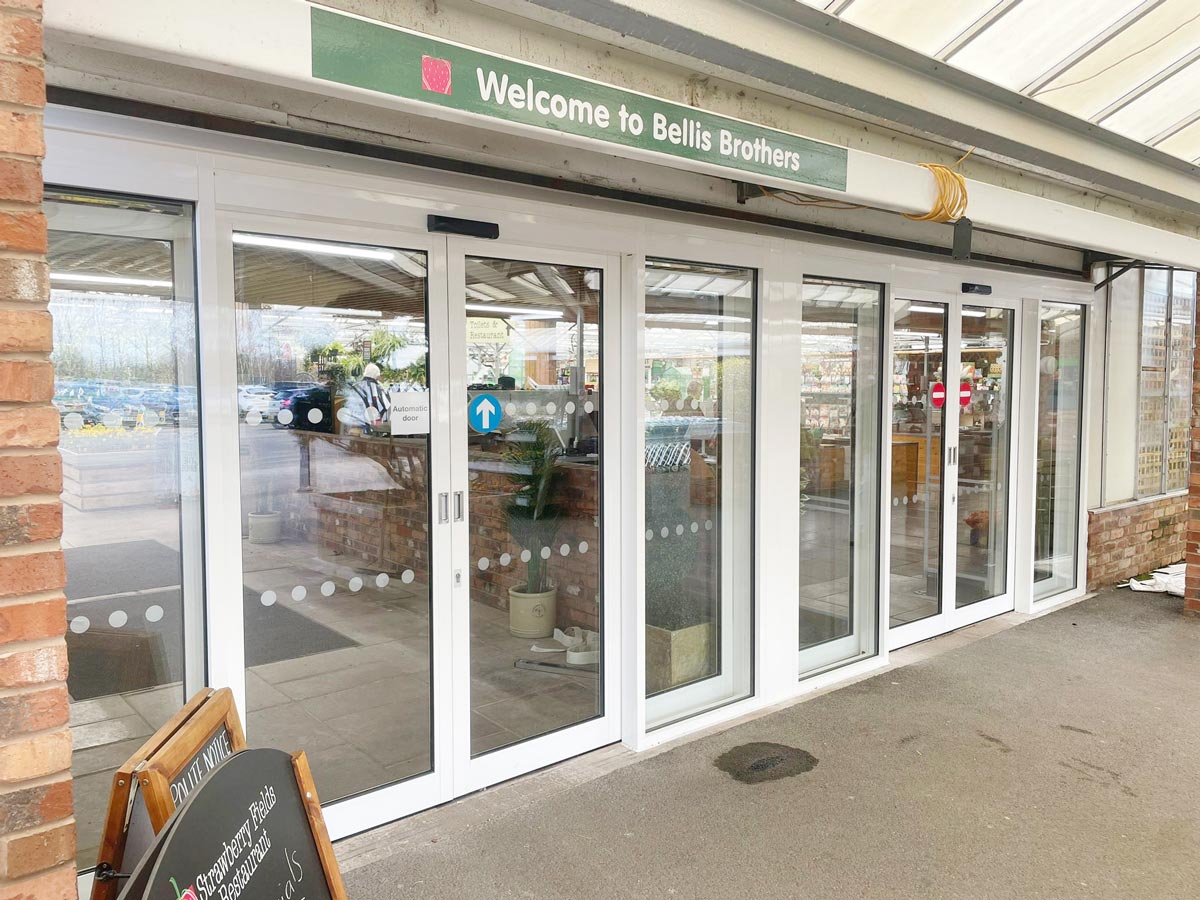
Sliding doors are the most common choice for commercial entrances. One or more panels move horizontally along a track, activated by sensors or access controls. They handle high traffic volumes efficiently and offer barrier-free entry that fully complies with accessibility requirements.
Sliding doors work well in retail outlets, supermarkets, healthcare facilities, airports, and office buildings. Telescopic variants with multiple stacking panels create wider clear openings where space is limited.
Automatic Swing Doors
Swing doors operate like traditional hinged doors but with automated opening and closing. An electric operator enables the door to swing inwards, outwards, or both directions depending on configuration.
These doors suit healthcare wards, care homes, offices, educational sites, and controlled access areas. They’re also ideal for retrospectively automating existing doorways. ADC Entrance Solutions offers retrofit capability to automate your current doors without full replacement.
Automatic Folding Doors
Folding doors use leaves that fold together to create an opening. They’re useful where swing doors would impede on adjacent spaces or in narrow corridors where a full door swing isn’t practical.
Folding doors handle traffic volumes comfortably and operate faster than swing alternatives. They’re particularly effective in windy locations where standard swing doors might be difficult to control.
Automatic Revolving Doors
Revolving doors create an airlock effect where the door is never fully open to the elements. This makes them energy efficient by maintaining internal temperatures and reducing heating costs. They also manage stack effect pressure in high-rise buildings.
Revolving doors suit hotels, airports, large offices, and premium commercial buildings. They create a prestigious entrance while delivering practical energy benefits.
What Safety Features Should Automatic Doors Include?
Modern automatic doors incorporate multiple safety systems that work together to protect users. Understanding these features helps you evaluate installations and maintenance requirements.
Presence Detection Systems
Sensors must detect people approaching or standing in the path of the door. Trigger sensors placed further from the door activate opening when someone approaches. Safety sensors fixed to the door leaf or frame halt or reverse operation when danger is detected.
Infrared or laser beams project into danger zones. If a person or obstruction breaks the beam, the sensor triggers immediately, stopping door movement. ADC Entrance Solutions ensures sensors are correctly calibrated during installation and checked during maintenance visits.
Force Limitation Controls
BS EN 16005 specifies maximum permissible forces for different types of impact. If someone comes into contact with a moving door leaf, the force must be limited to prevent injury. Properly calibrated force settings protect users while maintaining smooth operation.
Emergency Escape Provisions
Doors on escape routes must allow safe egress during emergencies. This typically means a breakout function that allows manual opening regardless of power status. In power failures or system faults, doors must default to a safe condition, usually remaining open or allowing manual operation.
Clear Identification and Signage
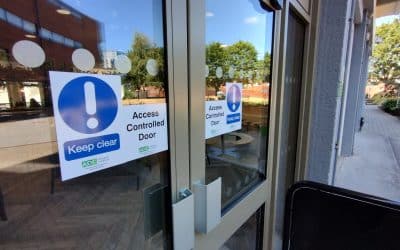
Automatic doors must be clearly marked as powered doors. Appropriate manifestation on glass panels makes doors visible to all users, including those with visual impairments. Warning signage helps users understand that potential risks are present.
The Automatic Door Suppliers Association (ADSA) recommends specific signage designed in consultation with organisations representing partially sighted people. This signage helps users, particularly those with visual impairments understand that doors are automatic.
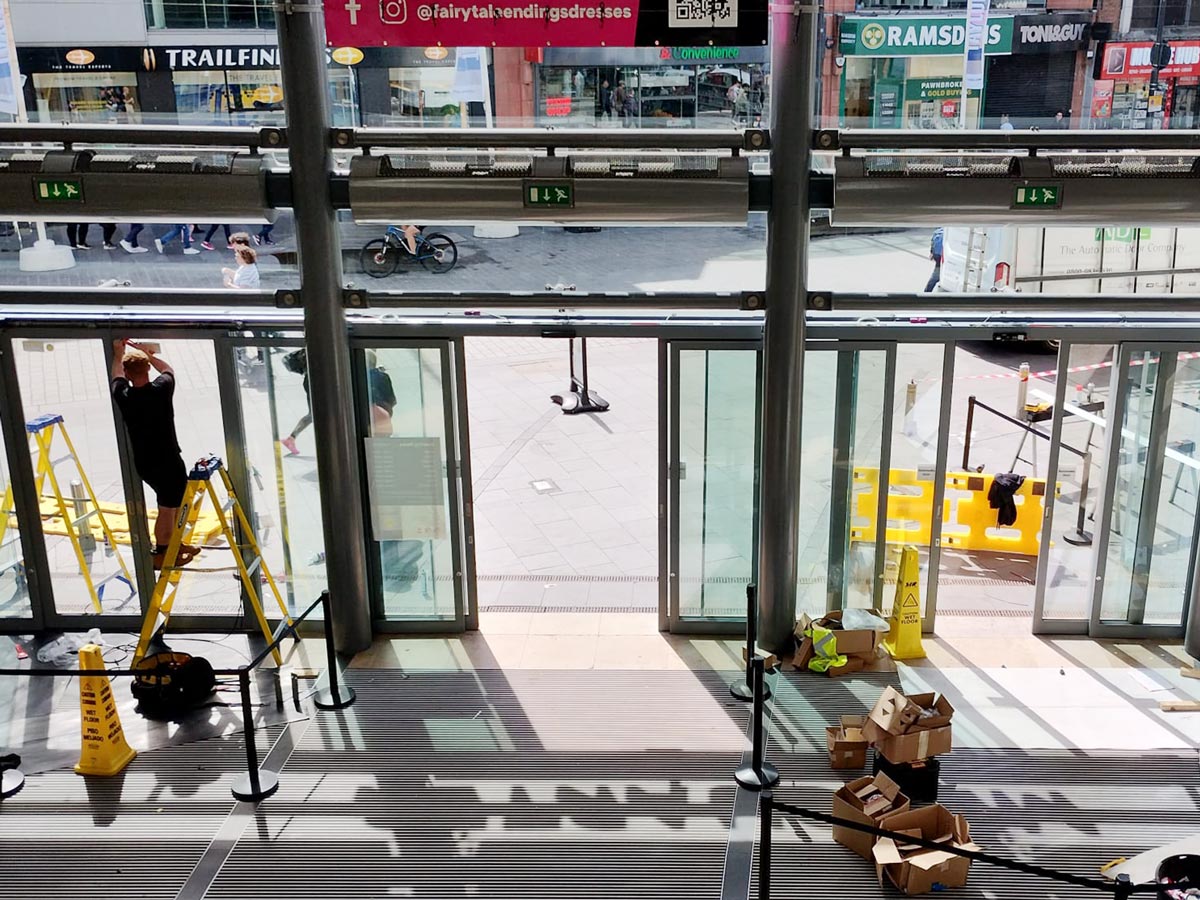
Why Does Professional Installation Matter for Automatic Doors?
Automatic door installation isn’t a DIY job. The mechanisms, sensors, and control systems require specialist knowledge to calibrate correctly. Poor installation creates ongoing problems and safety risks.
Correct Sensor Calibration from Day One
Sensors need precise positioning and calibration. Misaligned sensors can cause doors to open unexpectedly, delay opening when people approach, or fail to detect obstructions. A qualified engineer ensures coverage matches the door’s movement path and anticipated traffic patterns.
Compliance with Current Standards
ADC Entrance Solutions engineers are trained in BS EN 16005:2023 requirements. Every installation includes a documented risk assessment as required by the standard. This documentation protects building owners by demonstrating compliance if questions arise later.
Integration with Access Control Systems
Many commercial buildings need automatic doors integrated with access control such ascard readers, proximity fobs, or reception release buttons. Professional installation ensures these systems work together reliably, maintaining security while preserving accessibility for authorised users.
How Should You Maintain Automatic Doors to Keep Them Safe and Compliant?
Regular maintenance is a legal requirement. The Workplace (Health, Safety and Welfare) Regulations 1992 state that equipment devices and systems shall be subject to a suitable system of maintenance. PUWER (Provision and Use of Work Equipment Regulations 1998) requires employers to ensure work equipment is maintained in an efficient state, in efficient working order and in good repair.
Planned Preventative Maintenance Programmes
ADC Entrance Solutions offers tailored maintenance contracts designed to reduce downtime, extend equipment lifespan, and ensure full compliance with safety regulations. Scheduled visits catch wear before it causes failures. Our engineers test sensor coverage, check force settings, verify emergency functions, and confirm ongoing compliance.
Occupier Safety Checks
Between professional maintenance visits, building occupiers should carry out frequent safety checks. The ADSA recommends regular visual inspections and basic functional tests. These don’t replace authorised technician maintenance but help identify emerging issues early.
Responding to Safety Issues
If a technician finds a door unsafe, they have a legal requirement to ensure it’s safe when they leave site. This might mean switching the door to hold-open mode or switching it off entirely. The technician should complete a warning notice, explain why the system is unsafe, and describe what’s needed to restore safe operation.
What Risks Do Non-Compliant Automatic Doors Create?
Non-compliance with automatic door safety regulations carries serious consequences that extend beyond the immediate risk of injury.
Civil Claims and Criminal Prosecution
If an accident occurs, building owners may face civil claims for compensation from injured parties. More seriously, failure to comply with health and safety legislation can result in criminal prosecution. Fines can be substantial, and individuals found personally at fault may face imprisonment.
Insurance Coverage Problems
Many insurance policies require equipment to be maintained in accordance with applicable standards and regulations. A claim arising from a non-compliant automatic door could be rejected, leaving the building owner personally liable for damages.
Reputational Damage
An accident at your entrance affects how visitors, staff, and clients perceive your organisation. Demonstrating compliance through proper installation and documented maintenance protects your reputation alongside protecting people.
How Can You Ensure Your Automatic Door Installation Succeeds?
Getting automatic door installation right requires planning before work begins and ongoing attention after completion.
Pre-Installation Risk Assessment
A thorough risk assessment identifies potential hazards specific to your location. Consider the types of users likely to pass through, traffic volumes at different times, weather exposure, and any special requirements such as wheelchair access or trolley movement.
Verify that the installation site meets structural and safety requirements. Ensure the selected door type is suitable for its intended use and location.
Working with Qualified Installers
ADC Entrance Solutions engineers hold qualifications in BS EN 16005 installation and maintenance. Our team has over 28 years of experience installing automatic doors across health, education, retail, leisure, commercial and industrial sectors throughout the UK.
We design, manufacture, and install automatic door systems in-house, giving us complete control over quality and faster turnaround times. Every installation receives a one-year warranty.
Documentation and Training
After installation, you should receive documentation including the risk assessment, conformity declaration, and maintenance guidance. Staff who interact with the doors daily should understand normal operation and know what to do if something seems wrong.
What Should You Look for in an Automatic Door Installation Partner?
Choosing the right partner for automatic door installation and maintenance affects safety, compliance, and long-term costs.
Industry Accreditations and Qualifications
Look for companies with ADSA accreditation, which ensures high industry safety and quality standards. Engineers should hold relevant qualifications in BS EN 16005 and be able to demonstrate ongoing training as standards evolve.
Experience Across Your Sector
Different sectors have different requirements. Healthcare facilities need infection control considerations. Education settings must protect children. Retail environments handle high traffic volumes. ADC Entrance Solutions has delivered projects across all these sectors, understanding the specific challenges each presents.
End-to-End Service Capability
A partner who handles design, manufacture, installation, and ongoing maintenance delivers consistency throughout your door’s lifecycle. ADC Entrance Solutions offers this end-to-end capability, ensuring the people who installed your doors are the same people who maintain them.
Responsive Support When Problems Arise
Even well-maintained doors occasionally develop faults. Local engineers who can respond rapidly minimise disruption. ADC Entrance Solutions provides 24/7 emergency repairs with rapid local engineer dispatch, plus priority response for maintenance customers.
In Conclusion: How to Get Automatic Door Installations Right for Your UK Building
Automatic door installations affect safety, accessibility, and compliance in your commercial building. Getting them right means choosing appropriate door types for your specific needs, ensuring installation meets current UK standards, and maintaining proper documentation and maintenance schedules.
The regulations exist to protect everyone who passes through your entrance from staff, visitors, clients, and the public. Meeting these requirements isn’t just about avoiding penalties. It’s about creating an entrance that works reliably, welcomes everyone, and keeps people safe every day.
ADC Entrance Solutions brings over 28 years of experience to automatic door projects across the UK. Our in-house design, manufacturing, and installation capabilities mean we control quality at every stage. Whether you need a new installation, want to automate existing doors, or require maintenance for your current entrance systems, our team delivers reliable, compliant entrance solutions that stand the test of time.
FAQs about Automatic Door Installations for Safer UK Buildings
What safety standard applies to automatic doors in the UK?
BS EN 16005:2023 is the primary standard for power-operated pedestrian doorsets in the UK. It specifies safety requirements and test methods covering hazard mitigation, force limits, and sensor specifications. ADC Entrance Solutions installs doors that comply with this standard, ensuring your entrance meets current legal requirements.
How often should automatic doors be serviced?
Automatic doors should receive professional maintenance at least twice per year, with more frequent servicing for high-traffic installations. The Workplace Regulations 1992 and PUWER require a suitable maintenance system. ADC Entrance Solutions offers planned preventative maintenance programmes tailored to your door’s usage and environment.
What door width is required for wheelchair access?
Approved Document M requires at least 800mm clear opening for straight-on approaches, with 900mm or more preferred. For angled approaches in restricted spaces, 825mm minimum applies. Public buildings should aim for 900mm clear width. ADC Entrance Solutions ensures installations meet these accessibility requirements.
Can existing doors be converted to automatic operation?
Yes. ADC Entrance Solutions offers retrofit capability to automate existing doors without full replacement. Swing door operators can be fitted to aluminium, glass, wood, and even PVC doors. This approach preserves your current entrance aesthetics while adding automated convenience and accessibility.
What happens if an automatic door causes an injury?
Building owners may face civil claims for compensation and potential criminal prosecution under health and safety legislation. Insurance coverage may be affected if the door wasn’t compliant with applicable standards. Documented compliance with BS EN 16005 and regular maintenance records demonstrate due diligence.
What types of automatic doors are most energy efficient?
Revolving doors are the most energy efficient because they create an airlock—never fully opening to external conditions. This maintains internal temperatures and reduces heating costs. Sliding doors with intelligent sensors also improve efficiency by minimising unnecessary opening times.
How do automatic doors help with hygiene in commercial buildings?
Automatic doors with touchless sensors eliminate the need to physically touch handles or push pads. ADC Entrance Solutions fits touchless automatic door sensors that detect approaching visitors and open automatically. This reduces touchpoints throughout your building, particularly valuable in healthcare and food service environments.
In The Know
Making the Decision to Choose ADC Entrance Solutions
INFORMATIVE NEWS: Making the Decision to Choose ADC Entrance SolutionsDiscover why...
How Often Should Automatic Door Sensors Be Checked?
INFORMATIVE NEWS: How Often Should Automatic Door Sensors Be Checked and...
How Automatic Doors Support The Equality Act
INFORMATIVE NEWS: How Automatic Doors Support Equality Act AccessKey Takeaways: How...