
Are Your Automatic Doors Costing You More in Heating Bills?
With energy costs set to rise by up to 26% in the new year, there’s one area that’s often overlooked when reducing heating loss.
Your automatic doors.
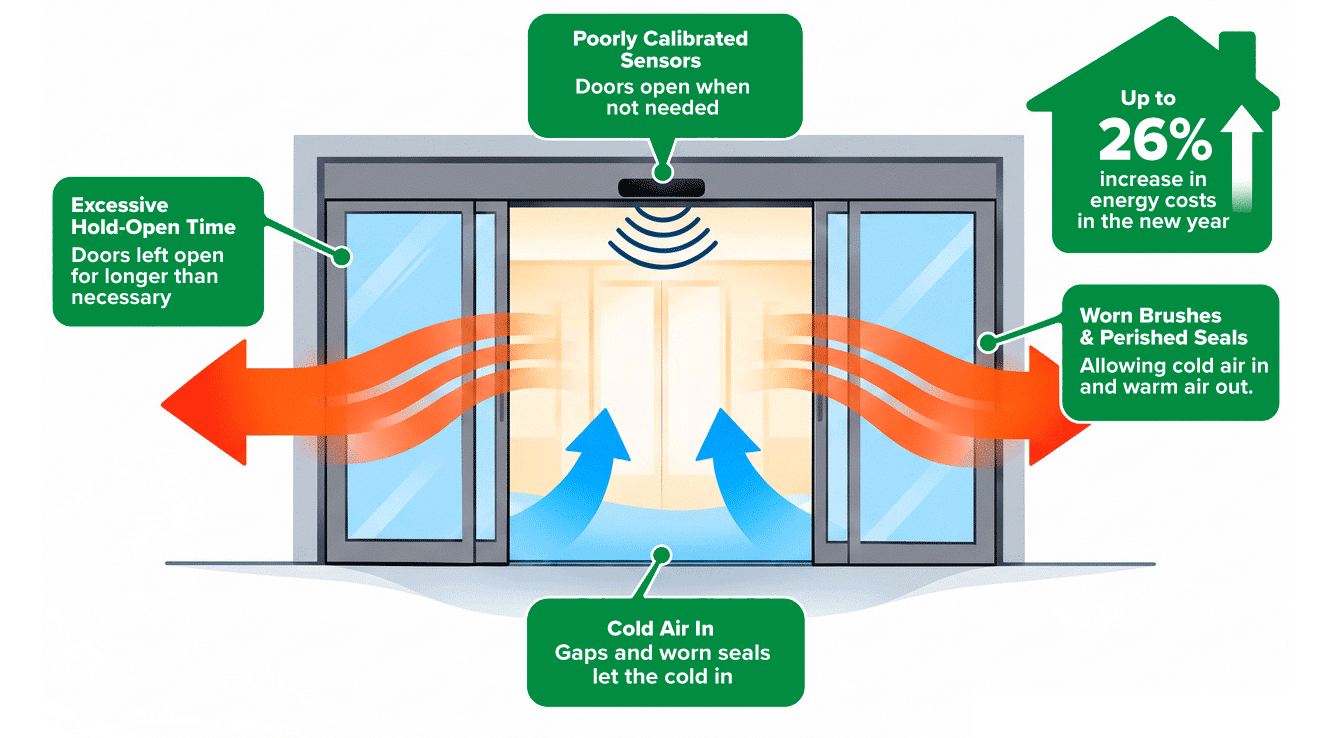
Automatic doors can open and close hundreds of times every day. Each unnecessary activation, every extra second they’re left open and even small gaps around worn seals can allow valuable heated air to escape.
And that’s money literally going out of the door.
We have highlighted 3 common issues that can contribute to heat loss:
- Poorly calibrated sensors triggering doors when nobody needs to enter or exit.
- Worn brushes and deteriorating seals allowing cold air in and warm air out
- Incorrect hold-open timings allowing heated air to escape for longer than necessary.
Individually, these issues might seem relatively minor. However, over weeks and months, the cumulative impact of unnecessary heat loss can add up.
Regular servicing, sensor recalibration, optimised opening times and replacement seals help keep your automatic doors operating safely and efficiently to keep that heat in.
Get in touch with our team to discuss your automatic door maintenance requirements and how regular servicing can help keep your building safe, efficient and warm.
Frequently asked questions
Can automatic doors contribute to reducing heat loss in a building?
Yes. Automatic doors can contribute to heat loss if they open unnecessarily, remain open for too long or have worn brushes and seals. Regular maintenance helps ensure doors operate efficiently and minimise the escape of heated air.
How can automatic door maintenance help reduce energy costs?
Regular servicing can identify issues such as poorly calibrated sensors, incorrect hold-open times and damaged seals. Addressing these problems helps reduce unnecessary door openings, limit draughts and improve overall building energy efficiency.
How often should automatic doors be serviced?
Automatic doors should be maintained in line with the manufacturer’s recommendations, relevant safety requirements and the level of usage. Regular Planned Preventative Maintenance (PPM) helps identify wear and potential issues before they develop into costly problems.
Can worn automatic door seals increase heating bills?
Yes. Damaged or deteriorating brushes and seals can create gaps around the door, allowing warm air to escape and cold air to enter. Replacing worn components can help improve insulation and maintain a more comfortable indoor temperature.
Can automatic door sensors be adjusted to prevent unnecessary openings?
Yes. Sensors can be inspected, recalibrated and repositioned where appropriate to help ensure doors only activate when required. Correct sensor settings can reduce unnecessary openings, helping to minimise heat loss while maintaining safe and reliable access.
In The Know
Automatic Door Winter Maintenance: 5 Essential Checks
INFORMATIVE NEWS: Automatic Door Winter Maintenance: 5 Essential Checks to Prevent...
Choosing Industrial Automatic Doors for High-Traffic Sites
INFORMATIVE NEWS: Choosing Industrial Automatic Doors for High-Traffic SitesWhen an...

Making the Decision to Choose ADC Entrance Solutions
INFORMATIVE NEWS: Making the Decision to Choose ADC Entrance SolutionsDiscover why...